
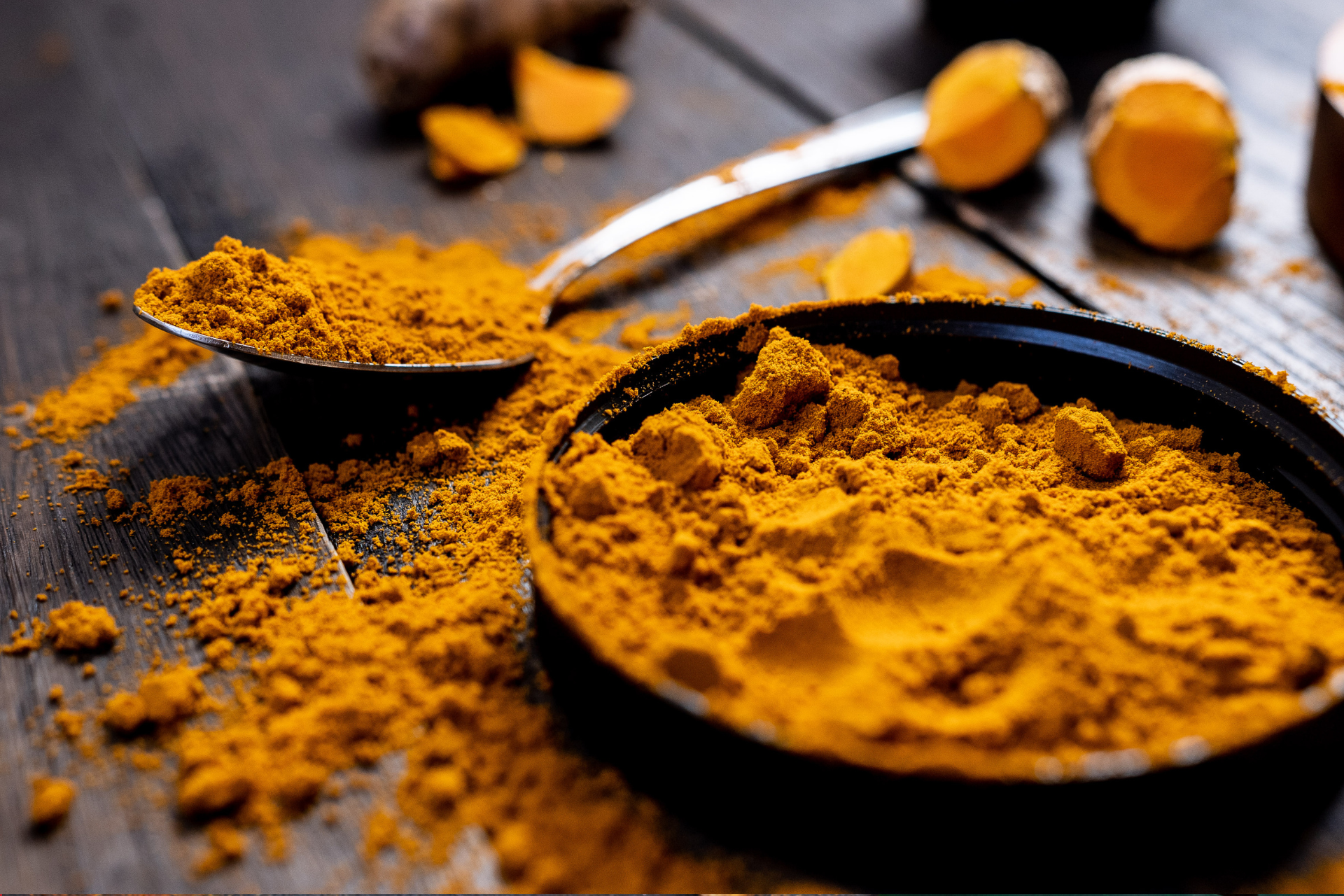
Curcumin is a natural substance derived from the turmeric plant Curcuma Longa. This polyphenol exhibits antioxidant, anti-inflammatory, antimutagenic, antimicrobial, anticancer, and neuroprotective properties. The beneficial effects are much greater when using curcumin alone rather that tumeric since tumeric has poor bioavailability (poor absorption, rapid metabolism, and elimination).
A number of clinical trials show that curcumin may be used as a therapeutic agent in the treatment of various eye diseases such glaucoma, cataract, age-related macular degeneration, diabetic retinopathy, corneal neovascularization, corneal wound healing, dry eye disease, conjunctivitis, pterygium, and anterior uveitis. Curcumin may inhibit the pathological effects of oxidative stress, inflammatory processes and angiogenesis for many eye conditions.
Curcumin has been used since the 14th century in traditional Chinese medicine and Ayurvedic medicine in Asian countries to treat liver diseases, rheumatoid diseases, diabetes, atherosclerosis, infectious diseases and cancer, and a number of eye diseases.
As a natural antioxidant, curcumin may reduce the effect of oxidative stress and the resulting damage to the cells by inflammation. Inflammation is a common factor of many degenerative and metabolic diseases and cancer.
Curcumin plays an important protective role for the retina. For age-related macular degeneration curcumin can help as an antioxidant, antiinflammatory and preventing and treating angiogenesis, a process that allows new blood vessels to be formed within the retina, leading to wet macular degeneration.
Dry eye disease is characterized by a decreased secretion of tears and rapid tear evaporation causing ocular surface damage. Curcumin may exert a protective effect on dry eye disease through its anti-inflammatory activity.
Glaucoma is a group of eye diseases where damage to the optic nerve and retina cause vision loss. The most common type is an open-angle glaucoma with less common types including closed-angle glaucoma and normal-tension glaucoma. The development of the disease involves retinal ganglion cell loss, i.e. thinning of the retinal nerve fiber layer and progressive loss of the visual field. Increased intraocular pressure within the eye is the most significant risk factor for glaucoma. However, in some populations only 50% of people with primary open-angle glaucoma actually have the ocular pressure elevated. In some cases, even when eye pressure decreased to normal levels, glaucoma progresses anyway. This is referred to as low tension glaucoma. Thus, neuroprotective agents and antioxidants are desired to prevent, limit or even fix the damage to the optic nerve.
Retinitis Pigmentosa is a group of degenerative eye diseases caused by genetic mutations that lead to severe vision loss and blindness. NEI-funded researchershave found that curcumin may successfully treat some forms of RP. A study led by Dr. Radha Ayyagari, associate professor of ophthalmology at the University of CA, San Diego, showed that curcumin prevented the abnormal and damaging protein build-up usually caused by the mutant gene. Curcumin can cross the blood-brain barrier, allowing for healing within the brain and eyes.
Nearly 100 million people worldwide suffer from diabetic retinopathy (DR) and is considered a global cause of blindness. Diabetic retinopathy is a metabolic disorder and a chronic inflammatory state that leads to damage to both photoreceptors and blood vessels of the retina. Oxidative stress induced by hyperglycemia and pathological neovascularization (a form of angiogenesis) contributes to the pathogenesis of diabetic retinopathy. Recent studies have shown that curcumin can delay DR development, although there has been no systematic review of its treatment in DR.
The powerful antioxidant and anti-inflammatory properties as well as the anti-angiogenesis effects of curcumin make it a potentially viable treatment for diabetic retinopathy, as well as AMD, both Wet and dry, glaucoma and retinitis pigmentosa.
I am an acupuncturist who specializes in the treatment of degenerative eye diseases using a specialized form of acupuncture called microacupuncture. Many of my patients take one of two herbal formulas that I prepare for helping those who have AMD, both wet and dry, retinitis pigmentosa, glaucoma, stargardts, optic nerve disorders and corneal conditions. I use curcumin in the eye herbal formulas I make because of the importance of and effectiveness of this special herb.
Therapeutic Potential of Curcumin in Eye Diseases”
2019 Jul 30;44(2):181–189. doi: 10.5114/ceji.2019.87070
NIH Pub Med, National Library of Medicine.Efficacy and Safety of
Curcumin in Diabetic Retinopathy: a Protocol for Systematic Review and Meta-analysis. National 10.1371/journal.pone.0282866
NIH Pub Med, National Librayr of Medicine
Leave a Reply